May 18, 2012

Max Igan’s Trance-Formation (Full)

Full film available for download at:
http://thecrowhouse.com
IP: http://67.20.81.143
from May 15th 2012

“Civil disobedience is not our problem. Our problem is civil obedience. Our problem is that people all over the world have obeyed the dictates of leaders and millions have been killed because of this obedience. Our problem is that people are obedient all over the world in the face of poverty and starvation and stupidity, and war, and cruelty. Our problem is that people are obedient while the jails are full of petty thieves and the grand thieves are running the country. That’s our problem. – Howard Zinn

Universal Law trumps all others.

1. No man or woman, in or out of government shall initiate force, threat of force or fraud against my life and property and, any and all contracts I am a party to, not giving full disclosure to me, whether signed by me or not, are void at my discretion.

2. I may use force in self-defense against anyone that violates Law 1.

3. There shall be no exceptions to Law 1 and 2.

Britain is ruled by the banks, for the banks

By  on December 12, 2011 8:00PM GMT

Is David Cameron’s kid-glove treatment of the City remotely justified, when it neither pays its way nor lends effectively?


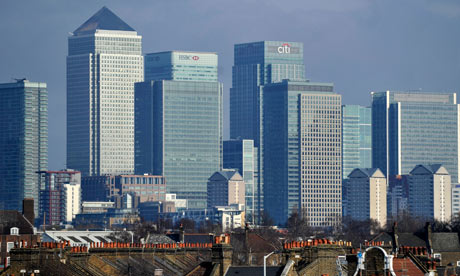
The City, London . . . Britain’s finance sector contributes less to the country than manufacturing. Photograph: Andy Rain/EPA

The national interest. It’s a phrase we’ve heard a lot recently. David Cameron promised to defend it before flying off last week to Brussels. Eurosceptic backbenchers urged him to fight for it. And when the summit turned into a trial separation, and the prime minister walked out at 4am, the rightwing newspapers took up the refrain: he was fighting for Britain. In the eye-burningly early hours of Friday morning, exhausted and at a loss to explain a row he plainly hadn’t expected, Cameron tried again: “I had to pursue very doggedly what was in the British national interest.”

As political justifications go, the national interest is an oddly ceremonial one. Like the dusty liqueur uncapped for a family gathering, MPs bring it out only for the big occasions. And when they do, what they mean is: forget all the usual fluff about ethics and ideas; this is important.

You heard the phrase last May, as the Lib Dems explained why they were forming a coalition with the Tories. More seriously, Blair used it as Britain invaded Iraq.

But here Cameron wasn’t talking about foreign policy; nor about who governs the country. The national interest he saw as threatened by Europe is concentrated in a few expensive parts of London, in an industry that would surely come bottom in any occupational popularity contest (yes, lower even than journalists): investment banking.

In its haste to depict events as Little Britain v Big Europe, the Tory press hasn’t dwelt on the inconvenient details of last week’s fight. But it was only after the prime minister failed to secure protection for the City from new financial regulation mooted by the EU that he told Nicolas Sarkozy to get on his vélo.

On one issue in particular, Cameron had a good case: Britain wants banks to put more money aside for a rainy day than the EU is considering. Elsewhere, he just looked unreasonable – what exactly is wrong with having international banking supervision? One reason for the euro crisis was that its members have 17 national bank watchdogs and barely anyone looking across borders.

Step back from what even EU officials were calling “arcane” details, though, and the big principle is this: the prime minister effectively stuck relations with the rest of Europe in the deep freeze in order to protect one sector of the economy.

In my recollection, no British minister in recent times has termed one industry as being of “national interest”. “Vital” or “key”? Why, such words are the very currency of the MP’s address to a trade association. But on the big phrase, I asked the Guardian’s librarians to check the archives from 1997 onwards. They came back empty-handed.

Cameron is merely expressing more openly something Labour frontbenchers also believe: that the City is pretty much the last engine functioning in Britain’s misfiring economy. Indeed, one of the Labour lines of attack against Cameron this weekend has been that he has left the City more open to regulation.

A few weeks ago, the shadow chancellor Ed Balls warned against any further taxes on financial trading within Europe. However, he said, he would urge a “Robin Hood tax with the widest international agreement”. In other words, Balls will give his fullest support to something that has no chance of happening.

This is the same kind of political subservience towards the City, observed by the Financial Services Authority (FSA) in its report into the collapse of RBS. According to the watchdog, a major reason why Fred Goodwin wasn’t checked as he drove RBS off a cliff was because of “a sustained political emphasis on the need for the FSA to be ‘light touch’ in its approach and mindful of London’s competitive position”. Had regulatorsbeen harder on the bankers, “it is almost certain that their proposals would have been met by extensive complaints that the FSA was pursuing a heavy-handed, gold-plating approach which would harm London’s competitiveness”.

As all British taxpayers know by now, securing the “competitiveness” of RBS has wound up costing us around £45bn.

So what is it that justifies the kid-glove treatment of the finance sector? Switch on the news and you normally hear some minister or lobbyist (come on down, Angela Knight of the British Bankers’ Association) talking about the vital contribution banking makes to employment. Our tax revenue. Or the role banks ideally play in directing money to needy businesses.

These claims are repeated so often that they rarely get even the briefest patdown from interviewers, let alone backbench MPs or economists. Yet they are largely bogus, as explained in a new book called After the Great Complacence, produced by academics at Manchester University’s Centre for Research on Socio-Cultural Change (Cresc). Indeed, on nearly any important measure, finance actually contributes less to Britain than manufacturing.

Take jobs. The finance sector employs 1m people in Britain. Chuck in the lawyers, the PRs and the smaller fry that swim in its wake and you are up to a grand total of 1.5m. And most of these people are not the investment bankers for whom Cameron went to war in Brussels. At the big British banks such as RBS and HBOS, 80% of the staff work in the retail business. Even if Sarkozy were to shroud Canary Wharf in a giant tricolore, those staff would still be needed to staff the branches and man the call centres. Even in its current state of emaciation, manufacturing employs 2m people.

What about taxes? Lobbyists like to point out that banks are usually the biggest payers of corporation tax, but usually omit to mention that corporation tax isn’t that big a money-spinner. For their part, even leftwingers will usually assume that the bankers effectively paid for the tax credits, hospitals and schools we enjoyed under Labour.

It’s not true. The Cresc team totted up the taxes paid by the finance sector between 2002 and 2008, the six years in which the City was having an almighty boom: at £193bn, it’s still only getting on for half the £378bn paid by manufacturing. It would be more accurate to say that the widget-makers of the Midlands paid for Tony Blair’s welfarism. But that would be a much less picturesque description.

Even in the best of times, the finance sector hasn’t paid anything like as much to the state as the state has had to pay for them since the great crash. According to the IMF, British taxpayers have shelled out £289bn in “direct upfront financing” to prop up the banks since 2008. Add in the various government loans and underwriting, and taxpayers are on the hook for £1.19tn. Seen that way the City looks less like a goose that lays golden eggs, and more like an unruly pigeon that leaves one hell of a mess for others to clear up.

Ah, but what about lending? After all, this is why we have banks in the first place: to channel money to productive industries. The Cresc team looked at Bank of England figures on bank and building society loans and found that at the height of the bubble in 2007, around 40% or more of all bank and building society lending was on residential or commercial property. Another 25% of all bank lending went to financial intermediaries. In other words, about two-thirds of all bank lending in 2007 went to pumping up the bubble.

This doesn’t look like a hard-working part of an economy humming along: it’s nothing less than epic capitalist onanism.

If the statistics don’t support the arguments for the City’s pre-eminence, the public don’t either. In 1983, 90% of the public agreed that banks in Britain were well run, according to the British Social Attitudes survey. By 2009, that had plunged to 19%.

In other words, both the evidence and the voters are against investment bankers. So why do the politicians cling on to them?

Part of the answer is financial. Bankers used the boom to buy themselves influence – so that, according to the Bureau of Investigative Journalism, the City now provides half of all Tory party funds. That is up from just 25% only five years ago.

Another part must be cultural. Running this government are two sons of bankers. Cameron’s father was a stockbroker, Clegg’s is still chairman of United Trust Bank (and famously helped his son get some work experience). For its part, Labour spent so long outsourcing all economic thinking to Gordon Brown and Ed Balls that it has long lost the ability to argue against the orthodoxy of giving the City what it wants.

In a poorer country, the cosiness of relations between bankers and politicians would be scrutinised by an official from the World Bank and disdainfully pronounced as pure cronyism. In Britain, we need to come up with a new word for this type of dysfunctional capitalism – where banks neither lend nor pay their way in taxes, yet retain a stranglehold on policy-making. We could try bankocracy: ruled by the banks, for the banks.

What are the results of bankocracy? It means that the main figures arguing for a Robin Hood tax are the Archbishop of Canterbury Rowan Williams and Bill Nighy. It means that opposition to the rule of banks isn’t found in Westminster, but in tents outside St Paul’s or among a few grizzled academics and NGO-hands – with no political vehicle to carry them. Meanwhile, the politicians declare that the national interest of Britain can be defined by what suits one square mile of it.

Source: http://www.guardian.co.uk/business/2011/dec/12/britain-ruled-by-banks

Occupy Endgame: Law Enforcement Arrests 1%’s War And Economic Criminals

By Carl Herman


The brilliant 2-minute video Waiting for the Storm, as seen below, is a message for police, sheriff, and military law enforcement to arrest US political, economic, and corporate “leadership” who have committed obvious crimes. 

Occupy’s endgame, in retrospect, will be obvious: after a period of “emperor has no clothes” expository communication from independent Internet media to the 99%, and citizen engagement with those facts, those with arrest authority will exercise it to remove criminal leadership from power.

The first criminal arrests will be for War Crimes and financial fraud. The most notable will be “leadership” of both US political parties and from the largest financial institutions involved in mortgage and “investment” frauds.

Importantly, the “criminal 1%” include corporate media who are criminal accomplices to enable and cover-up the murder of millions, deprivation of billions, and looting of trillions of our dollars. Their manipulative voices will be removed from power, quickly facilitating public communication of the objective facts of the depth of State crimes, and the inspirational future humanity is entering.

Occupy’s victory means peace from criminal wars based on obvious lies, economic security and sufficiency for 100% of humanity, and unleashing suppressed technologies that will transform what it means to be human into unimaginable status.

As an academic in the fields of government and economics, here are the resources I’ve developed to explain, document, and prove the “emperor has no clothes” obvious facts that require the arrests of US political and financial “leaders”.


Source: http://www.activistpost.com/2011/12/occupy-endgame-law-enforcement-arrests.html

Bank of America 2012: The Worst Is Yet To Come?

By: Dan Freed

Bank of America may have had a dismal 2011, but you haven’t seen nothing yet.

The thinking on Bank of America has long been that valuations are so low, the stock can’t get any lower — and then lower it goes. The problem, by and large, has been mortgage risk. Bank of America can’t ever seem to get a handle on how much exposure it has. The number just keeps growing and growing. 

But that won’t be the problem in 2012. As the famous saying goes, you don’t know who isn’t wearing swimming trunks until the tide goes out. In this case, however, we do know: it’s Bank of America. And things have been so bad for the bank — not only in 2011 but ever since the crisis — that we tend to forget that the tide hasn’t even gone out yet. We’ve had a serious crisis in Europe, massive political instability in the Middle East and Russia, and a recession  in the U.S. and the S&P 500 is only down 2.53 percent.

Some may see this as a sign of the market’s resilience, but that would be a mistake. Investors are still counting on the European crisis resolving itself. They are betting that European governments believe they have too much to lose by not eventually creating euro bonds.

But as Financial Times managing editor Gillian Tett explained on Charlie Rose last week, look how hard it was for former Treasury Secretary Hank Paulson to get the “bazooka” he needed from Congress to restore investor confidence in U.S. markets.

“I mean if you get, have problems getting one person for a bazooka, try to think about 17 people for a bazooka [that will shoot] in a straight line.”

The 17 people, of course, are the 17 countries that use the euro. If you think getting the U.S. Congress to agree on anything is tough, you haven’t seen a thing.

What that means is that, even if we don’t see Greece move back to the drachma, leading to a military coup, as was postulated in The New York Times on Tuesday, we are likely to come far closer than we have so far. That means a sharp market selloff at the very least, by which I mean a 5 percent-plus drop in the S&P 500 in a single day and volatility reminiscent of what we saw in 2008. If you think that means good things for Bank of America stock, you are sadly mistaken.

Bank of America CEO Brian Moynihan tried to assuage investor concern over this issue in a speech to investors earlier this month.

“With the uncertainty around some of the economies in the world, what’s going [on] in Europe on a given day, what could happen in the U.S., we continue to position ourselves and make sure that we are in good shape to last through anything we see ahead,” he said.

Looking at the combined Bank of America Merrill Lynch balance sheets from the third quarter of 2008, Moynihan said loans were at $1 trillion, and are 17 percent lower today. The loans are of better quality, he says, funding is less short-term than it used to be, he says.

And yet, you still have analysts like Deutsche Bank’s Matt O’Connor predicting the bank will have to issue $15 billion worth of stock next year.

It doesn’t take a Bank of America-related disaster to send the stock lower. Wednesday’s action was a good indicator of this fact, as Bank of Americas shares were down 1.69% about 75 minutes before the close as Europe-related tumult continued to roil the stock market. Shares of JPMorgan Chase  and Wells Fargo, meanwhile, were in positive territory.

Will Bank of America survive the coming market disaster?

Probably, but let’s get real, folks: this is not a canoe you want to be sitting in when the storm comes across the Atlantic.


Source:  http://www.cnbc.com/id/45673978

Fitch Downgrades Ratings on Five Major European Banks

By: CNBC.com

Fitch Ratings downgraded its credit ratings on five major European commercial banks and banking groups Wednesday as part of a broader review of its ratings on the largest banks in the world.  

In a press release, the rating firm said it downgraded Banque Federative du Credit MutuelCredit AgricoleDanske BankOP Pohjola Group and Rabobank Group.

The firm said the downgrades reflect the “broader phenomenon of stronger headwinds facing the banking industry as a whole. Exposure to troubled euro zone countries through their subsidiaries was a direct consideration in the downgrades of Danske Bank and Credit Agricole.”

For the other banks, Fitch said the crisis had “negative indirect consequences.”

Capital markets, “in particular interbank markets, are not functioning effectively, and, along with more global factors, the crisis is driving economic slowdown,” according to Fitch.


Britain Is Ruled By The Banks, For The Banks

By 

Is David Cameron’s kid-glove treatment of the City remotely justified, when it neither pays its way nor lends effectively?

The national interest. It’s a phrase we’ve heard a lot recently. David Cameron promised to defend it before flying off last week to Brussels. Eurosceptic backbenchers urged him to fight for it. And when the summit turned into a trial separation, and the Prime Minister walked out at 4am, the rightwing newspapers took up the refrain: he was fighting for Britain. In the eye-burningly early hours of Friday morning, exhausted and at a loss to explain a row he plainly hadn’t expected, Cameron tried again: “I had to pursue very doggedly what was in the British national interest.” 

As political justifications go, the national interest is an oddly ceremonial one. Like the dusty liqueur uncapped for a family gathering, MPs bring it out only for the big occasions. And when they do, what they mean is: forget all the usual fluff about ethics and ideas; this is important.

You heard the phrase last May, as the Lib Dems explained why they were forming a coalition with the Tories. More seriously, Blair used it as Britain invaded Iraq.

But here Cameron wasn’t talking about foreign policy; nor about who governs the country. The national interest he saw as threatened by Europe is concentrated in a few expensive parts of London, in an industry that would surely come bottom in any occupational popularity contest (yes, lower even than journalists): investment banking.

In its haste to depict events as Little Britain v Big Europe, the Tory press hasn’t dwelt on the inconvenient details of last week’s fight. But it was only after the prime minister failed to secure protection for the City from new financial regulation mooted by the EU that he told Nicolas Sarkozy to get on his vélo.

On one issue in particular, Cameron had a good case: Britain wants banks to put more money aside for a rainy day than the EU is considering. Elsewhere, he just looked unreasonable – what exactly is wrong with having international banking supervision? One reason for the euro crisis was that its members have 17 national bank watchdogs and barely anyone looking across borders.

Step back from what even EU officials were calling “arcane” details, though, and the big principle is this: the prime minister effectively stuck relations with the rest of Europe in the deep freeze in order to protect one sector of the economy.

In my recollection, no British minister in recent times has termed one industry as being of “national interest”. “Vital” or “key”? Why, such words are the very currency of the MP’s address to a trade association. But on the big phrase, I asked the Guardian’s librarians to check the archives from 1997 onwards. They came back empty-handed.

Cameron is merely expressing more openly something Labour frontbenchers also believe: that the City is pretty much the last engine functioning in Britain’s misfiring economy. Indeed, one of the Labour lines of attack against Cameron this weekend has been that he has left the City more open to regulation.

A few weeks ago, the shadow chancellor Ed Balls warned against any further taxes on financial trading within Europe. However, he said, he would urge a “Robin Hood tax with the widest international agreement”. In other words, Balls will give his fullest support to something that has no chance of happening.

This is the same kind of political subservience towards the City, observed by the Financial Services Authority (FSA) in its report into the collapse of RBS. According to the watchdog, a major reason why Fred Goodwin wasn’t checked as he drove RBS off a cliff was because of “a sustained political emphasis on the need for the FSA to be ‘light touch’ in its approach and mindful of London’s competitive position”. Had regulatorsbeen harder on the bankers, “it is almost certain that their proposals would have been met by extensive complaints that the FSA was pursuing a heavy-handed, gold-plating approach which would harm London’s competitiveness”.

As all British taxpayers know by now, securing the “competitiveness” of RBS has wound up costing us around £45bn.

So what is it that justifies the kid-glove treatment of the finance sector? Switch on the news and you normally hear some minister or lobbyist (come on down, Angela Knight of the British Bankers’ Association) talking about the vital contribution banking makes to employment. Our tax revenue. Or the role banks ideally play in directing money to needy businesses.

These claims are repeated so often that they rarely get even the briefest patdown from interviewers, let alone backbench MPs or economists. Yet they are largely bogus, as explained in a new book called After the Great Complacence, produced by academics at Manchester University’s Centre for Research on Socio-Cultural Change (Cresc). Indeed, on nearly any important measure, finance actually contributes less to Britain than manufacturing.

Take jobs. The finance sector employs 1m people in Britain. Chuck in the lawyers, the PRs and the smaller fry that swim in its wake and you are up to a grand total of 1.5m. And most of these people are not the investment bankers for whom Cameron went to war in Brussels. At the big British banks such as RBS and HBOS, 80% of the staff work in the retail business. Even if Sarkozy were to shroud Canary Wharf in a giant tricolore, those staff would still be needed to staff the branches and man the call centres. Even in its current state of emaciation, manufacturing employs 2m people.

What about taxes? Lobbyists like to point out that banks are usually the biggest payers of corporation tax, but usually omit to mention that corporation tax isn’t that big a money-spinner. For their part, even leftwingers will usually assume that the bankers effectively paid for the tax credits, hospitals and schools we enjoyed under Labour.

It’s not true. The Cresc team totted up the taxes paid by the finance sector between 2002 and 2008, the six years in which the City was having an almighty boom: at £193bn, it’s still only getting on for half the £378bn paid by manufacturing. It would be more accurate to say that the widget-makers of the Midlands paid for Tony Blair’s welfarism. But that would be a much less picturesque description.

Even in the best of times, the finance sector hasn’t paid anything like as much to the state as the state has had to pay for them since the great crash. According to the IMF, British taxpayers have shelled out £289bn in “direct upfront financing” to prop up the banks since 2008. Add in the various government loans and underwriting, and taxpayers are on the hook for £1.19tn. Seen that way the City looks less like a goose that lays golden eggs, and more like an unruly pigeon that leaves one hell of a mess for others to clear up.

Ah, but what about lending? After all, this is why we have banks in the first place: to channel money to productive industries. The Cresc team looked at Bank of England figures on bank and building society loans and found that at the height of the bubble in 2007, around 40% or more of all bank and building society lending was on residential or commercial property. Another 25% of all bank lending went to financial intermediaries. In other words, about two-thirds of all bank lending in 2007 went to pumping up the bubble.

This doesn’t look like a hard-working part of an economy humming along: it’s nothing less than epic capitalist onanism.

If the statistics don’t support the arguments for the City’s pre-eminence, the public don’t either. In 1983, 90% of the public agreed that banks in Britain were well run, according to the British Social Attitudes survey. By 2009, that had plunged to 19%.

In other words, both the evidence and the voters are against investment bankers. So why do the politicians cling on to them?

Part of the answer is financial. Bankers used the boom to buy themselves influence – so that, according to the Bureau of Investigative Journalism, the City now provides half of all Tory party funds. That is up from just 25% only five years ago.

Another part must be cultural. Running this government are two sons of bankers. Cameron’s father was a stockbroker, Clegg’s is still chairman of United Trust Bank (and famously helped his son get some work experience). For its part, Labour spent so long outsourcing all economic thinking to Gordon Brown and Ed Balls that it has long lost the ability to argue against the orthodoxy of giving the City what it wants.

In a poorer country, the cosiness of relations between bankers and politicians would be scrutinised by an official from the World Bank and disdainfully pronounced as pure cronyism. In Britain, we need to come up with a new word for this type of dysfunctional capitalism – where banks neither lend nor pay their way in taxes, yet retain a stranglehold on policy-making. We could try bankocracy: ruled by the banks, for the banks.

What are the results of bankocracy? It means that the main figures arguing for a Robin Hood tax are the Archbishop of Canterbury Rowan Williams and Bill Nighy. It means that opposition to the rule of banks isn’t found in Westminster, but in tents outside St Paul’s or among a few grizzled academics and NGO-hands – with no political vehicle to carry them. Meanwhile, the politicians declare that the national interest of Britain can be defined by what suits one square mile of it.


Source:  http://www.guardian.co.uk/business/2011/dec/12/britain-ruled-by-banks

It’s On: Iran Closes Straits Of Hormuz, Oil Explodes

By Tyler Durden 

Iran has closed the Straits of Hormuz for military training as was expected yesterday, according to RanSquawk. Oil, and all other commodities, are soaring. 

And for those curious about more, RanSquawk speculates that the source of the data is a report in the Tehran Times saying that Iran will hold War Games in which it would close the Straits. Unclear if this is what Ran referenced when they said the Straits were already closed.

TEHRAN – MP Parviz Sorouri of the Majlis National Security and
Foreign Policy Committee has said that Iran plans to practice its
ability to close the Strait of Hormuz, one of the world’s most
strategically important chokepoints, which accounts for about 30% of the
world’s seaborne oil shipments.

Currently,the Middle East region supplies 70 percent of the world’s energy needs,
(most of) which are transported through the Strait of Hormuz. We will
hold an exercise to close the Strait of Hormuz in the near future. If
the world wants to make the region insecure, we will make the world
insecure,” ISNA quoted Sorouri as saying on Tuesday.


Source:  http://www.zerohedge.com/news/its-iran-closes-straits-hormuz-oil-explodes

George Carlin – Bankers

George Carlin Talks About Big Banks Who Own Everthing And Talks About How You Are A Slave.

World Banker Makes Stunning Confession

The Video Everyone Needs To See, But For Different Reasons… The Former President Of The World Bank, James Wolfensohn, Makes Stunning Confessions As He Addresses Graduate Students At Stanford University.

He Reveals The Inside Hand Of World Domination From Past, To The Present And Into The Future. The Speech Was Mas Made January 11Th, 2010. The Next 19 Minutes May Open Your Mind To A Very Deliberate World.

He Tells The Grad Students What’s Coming, A “Tectonic Shift” In Wealth From The West To The East. But He Doesn’t Tell The Students That It Is His Institution, The World Bank, That’s Directing And Channeling These Changes.

Wolfensohn’s Own Investment Firm Is In China, Poised To Profit From This “Imminent Shift” In Global Wealth.


European debt crisis spiralling out of control

Reports that Germany and France have begun talks to break up the eurozone amid fears that Italy will be too big to rescue

Fears that Europe’s sovereign debt crisis was spiralling out of control have intensified as political chaos in Athens and Rome, and looming recession, created panic on world markets.

Reports emerging from Brussels said that Germany and France had begun preliminary talks on a break-up of the eurozone, amid fears that Italy would be too big to rescue.

Despite Silvio Berlusconi’s announcement that he would step down as prime minister once austerity measures were pushed through parliament, a collapse of investor confidence in the eurozone’s third-biggest economy sent interest rates in Italy to the levels that triggered bailouts in Portugal, Greece and Ireland.

Italian bond yields surged through the critical 7% mark, at one point hitting 7.5%, amid concern that the deteriorating situation had moved the crisis into a dangerous new phase. 

In Athens talks to appoint a prime minister to succeed George Papandreou were in deadlock, and will resume on Thursday morning. The Italian president, Giorgio Napolitano, sought to reassure the markets by promising that Berlusconi would be leaving office soon.

Angela Merkel, the German chancellor, said the situation had become “unpleasant”, and called for eurozone members to accelerate plans for closer political integration. “It is time for a breakthrough to a new Europe,” she said. “Because the world is changing so much, we must be prepared to answer the challenges. That will mean more Europe, not less Europe.”

The president of the European commission, José Manuel Barroso, issued a new call for the EU to “unite or face irrelevance” in the face of the mounting economic crisis in Italy. “We are witnessing fundamental changes to the economic and geopolitical order that have convinced me that Europe needs to advance now together or risk fragmentation. Europe must either transform itself or it will decline. We are in a defining moment where we either unite or face irrelevance,” he said.

Senior policymakers in Paris, Berlin and Brussels are reported to have discussed the possibility of one or more countries leaving the eurozone, while the remaining core pushes on toward deeper economic integration, including on tax and fiscal policy. “France and Germany have had intense consultations on this issue over the last months, at all levels,” a senior EU official in Brussels told Reuters, speaking on condition of anonymity because of the sensitivity of the discussions.

Financial regulators across Europe were last night carefully monitoring the health of their heavily exposed banks, amid concern that the turmoil could lead to a debt default, or even the break-up of the euro.

George Osborne, just three weeks away from delivering his autumn statement on the health of the economy, believes Europe’s problems are blighting the UK’s growth prospects, but he will use the sell-off of Italian bonds to insist there is no alternative to his austerity plans.

Nick Clegg, the deputy prime minister, spent Wednesday in Brussels urging the council president, Herman Van Rompuy, and a clutch of EU commissioners to focus on growth, and not further treaty changes, warning that if Europe does not become more competitive it will end up in a spiral of perpetual decline. Both he and David Cameron are urging EU integrationists to recognise that EU Treaty changes in the next few months would be a massive distraction and no cure for the underlying economic crisis. He pointed out that they would require referendums in at least four countries.

The latest chapter in the ongoing sovereign debt crisis came as Bank of England policymakers gathered for their monthly two-day interest rate-setting meeting. The monetary policy committee announced £75bn-worth of quantitative easing last month in an effort to prevent a recession.

City analysts believe the renewed turmoil in the eurozone is pointing to a deep recession in Europe. “It’s unavoidable that there will be an outright contraction in the fourth quarter of this year, and a 60%-70% chance of another decline in the first quarter of next year,” said Nick Parsons, head of strategy at National Australia Bank.

Shares fell heavily on both sides of the Atlantic. The Italian stock market lost 4% of its value. The FTSE100 index of leading shares closed 106.96 points down, at 5460.38. The Dow Jones closed 389 points down at 11,780.94.

Christine Lagarde, head of the IMF, told a financial forum in Beijing that Europe’s debt crisis risked plunging the global economy into a Japan-style “lost decade” of weak growth and deflation.

“Our sense is that if we do not act boldly and if we do not act together, the economy around the world runs the risk of a downward spiral of uncertainty, financial instability and potential collapse of global demand … we could run the risk of what some commentators are already calling the lost decade.”

Simon Derrick, currency strategist at BNY Mellon, said: “We’re at the point of asking the question, if I put my money into Italy, am I going to get it back? The fact is, there isn’t a safety net.” He added that the mood in the City was reminiscent of Black Wednesday, in September 1992, when the UK crashed out of the European Exchange Rate Mechanism.

The surge in Italian bond yields was eventually capped by the European Central Bank, which intervened in the markets to buy limited quantities of Italian debt. But analysts say the ECB will eventually have to step up its action, and act as a lender of last resort to bring interest rates down to pre-crisis levels. Sony Kapoor, director of Brussels-based think-tank Re-Define, said: “We may be fairly close to the point where an existential threat to the eurozone, and hence the ECB, is on the horizon. This could easily spiral out of control.”

The ECB is seen as the only institution with the firepower to rescue Italy, because the EU lacks the resources to bail out such a large economy. Ben May, of Capital Economics, said Italy would need a €650bn bailout to keep it out of financial markets for the next three years or so. “The European Financial Stability Facility will not be able to provide a bailout of this size,” he said.

Officials in Brussels insisted on Wednesday there would be no rescue package for Rome, saying, “financial assistance is not on the cards”. A key test will come on Thursday morning when Italy has to raise €5bn from investors on the bond market.

Economic and monetary affairs commissioner Olli Rehn ratcheted up the political pressure on Italy with a strongly-worded letter to finance minister Giulio Tremonti. In it, Rehn demanded concrete written details of how Italy will implement each of the 39 separate reform measures it has promised to undertake.

In Rome the head of state, Giorgio Napolitano, insisted that Berlusconi would be leaving office soon, and that his departure would not be the prelude to a lengthy period of political instability.

His intervention came after hurried consultations with the speakers of both houses of parliament to ensure the speediest possible approval for a package of economic reform and austerity measures agreed with the European institutions. On Tuesday evening, after losing his majority in the chamber of deputies, Berlusconi told Napolitano he would resign.

But, to prevent the economic measures being blocked by the fall of his government, he said he would only go once the package had been approved.

As concern grew that he might delay the passage of the legislation, which has become a litmus test of Italy’s credibility in the markets, Berlusconi said he would insist on holding new elections and one of his ministers speculated that could be next February.

After the yield on Italy’s benchmark bonds soared above 7%, taking interest rates to a level beyond which previous euro zone debt crisis victims have sought a bail-out, the president issued a statement to say the new economic measures would be “approved in the space of a few days” and that there was “no uncertainty over the prime minister’s decision to resign”.

Napolitano, who cannot begin consultations with party leaders until Berlusconi leaves office, said that either a new government would be formed “to take every necessary decision” or an election would be held “within the shortest time”.

That would still mean a vote was not held until January. But a source close to the president stressed to the Guardian that “early elections are not a foregone conclusion.”

Source:

http://www.guardian.co.uk/business/2011/nov/09/european-debt-crisis-eurozone-breakup